Limited Time — Save Up to $120 + FREE Shipping on 6 Jars + 90-Day Money-Back Guarantee
HomeIngredientsBenefitsReviewsCompareGut ScienceConstipation ReliefFiber GuideMicrobiomePrebiotic vs ProbioticCompareScam or Legit?Where to BuyDisclaimerPrivacyTermsOrder Now

Prebiotic vs Probiotic: Which Does Your Gut Actually Need?

One feeds bacteria. The other adds bacteria. Here is which matters more.

Last Updated: April 5, 2026 · Reviewed by Dr. Sarah Kim, RDN

Prebiotics vs Probiotics: Which Does Your Gut Actually Need?

This is the question that confuses more people than any other in gut health, so let me make it simple. Probiotics are live bacteria you swallow. Prebiotics are the fiber that feeds bacteria already living in your gut. Both matter, but they work through fundamentally different mechanisms — and for constipation specifically, one tends to outperform the other.

How Probiotics Work

Probiotic supplements contain live bacterial strains (Lactobacillus, Bifidobacterium, etc.) in capsule or powder form. When you swallow them, the bacteria have to survive your stomach acid, compete with your existing gut population (38 trillion strong), and find a niche where they can establish themselves. Many do not survive this journey. The ones that do provide temporary benefits while you keep taking them but often wash out when you stop. Probiotic benefits include support for immune function, some digestive improvement, and competition with harmful bacteria. They work best for people whose gut bacteria population has been depleted (like after antibiotics).

How Prebiotics Work

Prebiotics skip the survival gauntlet entirely (PMID: 30586435). Instead of introducing foreign bacteria that may or may not establish themselves, prebiotics (Acacia Gum, FOS, Inulin, XOS) feed the bacteria that are already adapted to your personal gut environment. These resident bacteria have been living in your gut for years — they are established, adapted, and just need the right fuel to thrive. When they receive consistent prebiotic fiber, they multiply, produce beneficial short-chain fatty acids, and naturally regulate the digestive processes that control your bowel movements.

Which Approach Is Better for Constipation?

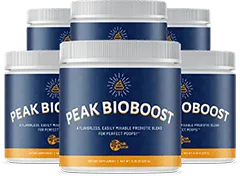
For constipation specifically, prebiotics tend to produce more consistent results. The reason is mechanical: constipation is primarily about stool consistency and transit speed, both of which are directly influenced by fiber intake and bacterial fermentation activity. Prebiotics provide the fiber that softens stool AND feed the bacteria that regulate transit. Probiotics can support the microbial environment but they do not provide the fiber component that physically changes stool consistency. That is why Peak BioBoost (4 prebiotic fibers + magnesium) specifically targets the mechanisms driving constipation rather than just adding more bacteria to a system that may not need more bacteria — it may just need better food for the bacteria it already has.

Can You Take Both?

Absolutely. Prebiotics and probiotics are complementary, not competing. Prebiotics make probiotics more effective by creating a gut environment where introduced bacteria are more likely to survive and thrive. If you take a probiotic supplement, adding a prebiotic like Peak BioBoost provides the fuel that helps those introduced bacteria establish themselves. Many gastroenterologists recommend the combination approach — called "synbiotic" support — for the broadest digestive benefits.

The practical bottom line: if you are dealing with constipation, bloating, and irregular bowel movements, prebiotic fiber supplementation (Peak BioBoost) addresses the specific mechanisms driving those symptoms more directly than probiotics alone. If you want to maximize your gut health across all dimensions, combine a prebiotic with a quality probiotic. The 90-day guarantee on Peak BioBoost covers your prebiotic evaluation risk-free. 12,000+ users at 4.8 stars confirm the prebiotic approach delivers consistent digestive improvement.

Why Prebiotics Often Outperform Probiotics for Constipation

Here is a practical truth that the probiotic industry does not want you thinking about: most probiotic strains have minimal direct effect on stool consistency and bowel movement frequency. Probiotics influence the gut environment broadly, but the specific mechanisms that determine whether you poop today — stool softness, transit speed, intestinal muscle relaxation, bacterial fermentation patterns — are more directly influenced by prebiotic fiber intake than by swallowing additional bacteria. This is why people take expensive probiotics for months with minimal change in their bathroom routine, but notice improvement within a week of adding prebiotic fiber.

The combination of prebiotics plus probiotics (synbiotic approach) is the gold standard for comprehensive gut health. But if constipation is your primary concern and you have to choose one, prebiotics address the mechanisms driving constipation more directly. Peak BioBoost provides four prebiotic fibers plus magnesium — covering both the biological fuel for bacteria AND the mechanical relaxation of intestinal muscles. No probiotic supplement does both. The 90-day guarantee lets you evaluate whether prebiotic support resolves what probiotics alone could not.

Prebiotics vs probiotics is not really a competition. They are partners. But understanding which does what helps you make smarter purchasing decisions. For constipation and regularity: prebiotics first. For post-antibiotic recovery: probiotics first. For comprehensive gut health: both together. Peak BioBoost handles the prebiotic side with four fibers and magnesium. The 90-day guarantee covers your evaluation. 12,000+ users at 4.8 stars confirm the prebiotic approach delivers consistent digestive improvement.

The Cost-Effectiveness Comparison

Probiotics typically cost $25–50/month for a quality product. Prebiotics like Peak BioBoost cost $29.95/month on the 6-jar deal. The difference in cost is minimal but the difference in mechanism is significant. Probiotics introduce bacteria that may or may not survive and establish themselves. Prebiotics feed the bacteria already adapted to your gut. For constipation specifically, prebiotic fiber produces more consistent results because it addresses the stool-consistency and transit-speed mechanisms that drive the actual symptoms. A $30/month probiotic that does not fix your constipation is more expensive than a $30/month prebiotic that does.

The smartest investment for most people dealing with constipation: start with prebiotics (Peak BioBoost) for 3 months. If regularity improves (which it does for the vast majority), you have found your solution at $30/month. If you want additional microbiome support beyond digestive regularity, add a quality probiotic to create a synbiotic protocol. This sequenced approach saves money and identifies which component is doing the heavy lifting for YOUR specific gut. The 90-day guarantee on Peak BioBoost covers the initial evaluation completely.

Prebiotics feed what you have. Probiotics add what you might need. For constipation, feeding what you have works faster and more consistently. One scoop of Peak BioBoost provides four prebiotic fibers plus magnesium — covering both biological fuel and mechanical relaxation in one daily serving. 12,000+ users at 4.8 stars. 90-day guarantee. Your gut bacteria are hungry. Feed them.

When to Choose Probiotics Over Prebiotics

Probiotics make more sense in specific situations: after a course of antibiotics (to repopulate depleted bacterial populations), during active gastrointestinal infections (specific strains like Saccharomyces boulardii can help), for certain conditions like antibiotic-associated diarrhea, and for people with severely depleted gut flora from illness or medical treatments. In these cases, introducing bacteria makes more sense than feeding bacteria that may not be present in sufficient numbers.

For chronic constipation, bloating, and irregular bowel movements in otherwise healthy adults — which is the majority of people seeking digestive support — prebiotics address the specific mechanisms driving symptoms more directly than probiotics. The four prebiotic fibers in Peak BioBoost (PMID: 17221839) provide the fuel that softens stool, feeds bacteria, speeds transit, and reduces bloating. Magnesium relaxes the intestinal muscles. Together they create the conditions for natural, self-sustaining regularity.

The bottom line: probiotics for acute gut disruptions and specific medical situations. Prebiotics for chronic digestive support and constipation management. Both together for comprehensive gut health optimization. Peak BioBoost handles the prebiotic side with four fibers and magnesium in a single flavorless daily scoop. 90-day guarantee. 12,000+ users at 4.8 stars. Your evaluation starts tonight.

Building Your Gut Health Protocol

For most people dealing with constipation and digestive irregularity, the most effective protocol starts with prebiotics. Peak BioBoost’s four fibers plus magnesium address the specific mechanisms driving constipation: bacterial starvation, stool dryness, slow transit, and muscle tension. Once regularity is established (typically 2–4 weeks), you can evaluate whether adding a probiotic provides additional benefit for immune support, mood, or other dimensions of gut health.

This prebiotics-first approach is both more cost-effective and more diagnostically useful than taking both simultaneously. If prebiotics alone resolve your constipation, you have identified the issue (bacterial starvation and mechanical tension) and found the solution. If prebiotics improve but do not fully resolve symptoms, adding a probiotic may address the remaining gap. This sequential approach saves money and produces clearer insight into what your specific gut needs.

Peak BioBoost. Four prebiotic fibers. Magnesium. Flavorless. One scoop daily. The prebiotic foundation of your gut health protocol. 90-day guarantee covers the evaluation. 12,000+ users at 4.8 stars confirm the prebiotics-first approach delivers consistent digestive improvement. Start your protocol tonight.

The Practical Takeaway

For constipation: prebiotics first. They address the specific mechanisms (bacterial feeding, stool softening, transit speed, muscle relaxation with magnesium) that drive the symptoms you are dealing with. Probiotics are valuable for acute gut disruptions and broader health optimization but do not address the fiber and mechanical components of constipation as directly.

Peak BioBoost provides the prebiotic foundation: four fibers targeting four bacterial populations plus magnesium for intestinal relaxation. If prebiotics resolve your constipation (which they do for most consistent users), you have found your solution. If you want additional microbiome support, add a probiotic to the prebiotic foundation.

The prebiotics-first approach is more cost-effective, more diagnostically clear, and more directly targeted at constipation than the probiotics-first approach. 12,000+ users at 4.8 stars confirm that prebiotics deliver consistent digestive improvement. The 90-day guarantee covers your evaluation. One scoop daily. Flavorless. No drama. Start tonight.

The prebiotics vs probiotics question has a practical answer: for constipation, start with prebiotics. They address the fiber, bacterial feeding, and transit mechanisms driving your symptoms more directly than introducing foreign bacteria through probiotic capsules. Peak BioBoost provides four prebiotic fibers plus magnesium — five ingredients covering four constipation mechanisms in one flavorless daily scoop.

If prebiotics resolve your digestive issues (which they do for most consistent users), you have found your solution at $0.99/day. If you want additional microbiome support beyond regularity, add a probiotic to the prebiotic foundation. This sequential approach saves money and identifies which intervention your specific gut needs most. 12,000+ users at 4.8 stars confirm the prebiotic-first approach works. 90-day guarantee. Start tonight.

Prebiotics feed what you have. Probiotics add what you might need. For constipation relief, feeding what you have works faster, costs less, and addresses more of the mechanisms driving your symptoms. Peak BioBoost provides four prebiotic fibers plus magnesium — the most complete prebiotics-first approach available. 12,000+ users at 4.8 stars. 90-day guarantee. One scoop daily in any drink. Start the prebiotic approach tonight and evaluate the results over 90 risk-free days.

Prebiotics first for constipation. Peak BioBoost provides four prebiotic fibers plus magnesium in a single flavorless scoop. The most direct approach to the mechanisms driving your symptoms. 12,000+ users at 4.8 stars chose prebiotics first. 90-day guarantee covers your evaluation. Start the prebiotic approach tonight.

For constipation: prebiotics first. For post-antibiotic recovery: probiotics first. For complete gut health: both. Peak BioBoost handles the prebiotic side with four fibers and magnesium. One daily scoop. Flavorless. 90-day guarantee. 12,000+ users chose prebiotics first for constipation and rated the results 4.8 stars. Your evaluation starts tonight.

Prebiotics first. Four fibers plus magnesium. Peak BioBoost. 90-day guarantee. 12,000+ users at 4.8 stars. Start tonight. Your gut bacteria have been waiting for the right fuel.

Prebiotics first. Probiotics second. Peak BioBoost provides the prebiotic foundation.

Try Peak BioBoost — 90-Day Guarantee

Feed Your Gut Right

Peak BioBoost
Order Peak BioBoost Now